Bachelors in Cybersecurity

The Cybersecurity programme at Biratnagar International College, in direct partnership with the University of Wolverhampton, aims to provide students with a solid foundation in protecting organisations, networks, IT systems, and individuals from cyber threats and attacks. The University of Wolverhampton was named “Cyber University of the Year 2022” at The National Cyber Awards.

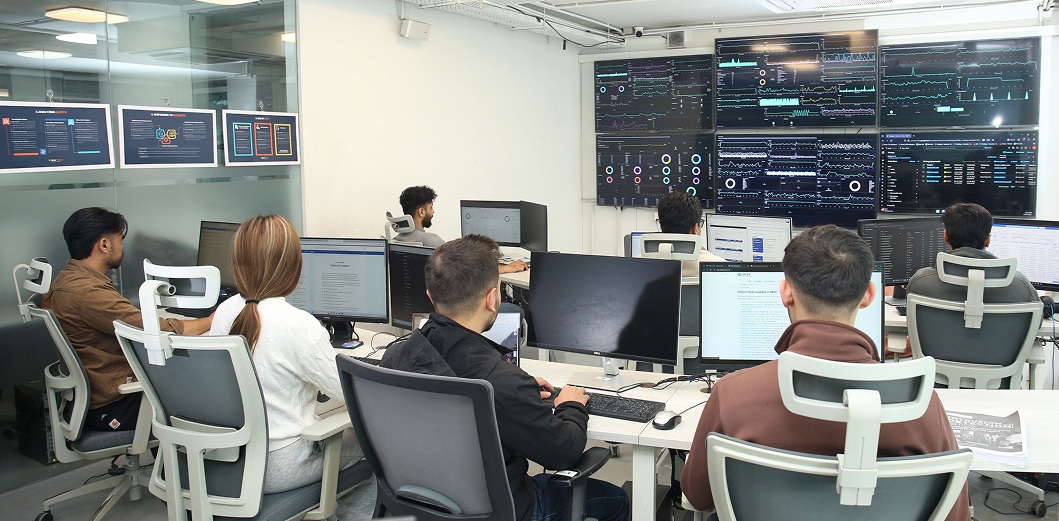
This programme covers fundamental security principles and the skills required to monitor, detect, investigate, analyse, and respond to cybercrime, cyber-espionage, insider threats, advanced persistent threats, regulatory obligations, and other cybersecurity challenges faced by organisations. The programme places a strong emphasis on the practical application of skills necessary to maintain and ensure the operational security of networked systems. It offers an understanding of how to manage information and the associated risks, alongside practical strategies for implementing controls to mitigate those risks.
  • Year 1
  • Year 2
  • Year 3

Introductory Programming and Problem Solving

module: 4CS001 Credits : 20 Type: core

This module introduces students to the key principles used in modern programming languages, preparing students to confidently work across different languages. Students will learn essential concepts such as problem-solving, algorithm design and construction (including sequence, selection, iteration, and diagrammatic representations like object and activity diagrams), as well as variables, data types, assignment operations, and logic. The module also covers basic object-oriented programming concepts (objects and classes, attributes and methods, encapsulation), programming best practices (including style, testing, and debugging), and fundamental data structures such as arrays and lists.

Fundamentals of Computing

module: 4CS015 Credits : 20 Type: core

This module provides a strong foundation in core computing concepts and teaches students how to apply them effectively and efficiently. It equips students with the knowledge and skills needed to succeed in their degree and future careers. The module is designed to be accessible to students with different levels of prior experience, while offering additional benefits to those who already have computing knowledge. Topics covered include Logic and Boolean algebra, truth tables, computer architecture, number systems, command-line operations, data processing, digital communications, computer security, and databases.

Internet Software Architecture and Databases

module: 4CS017 Credits : 20 Type: core

This module focuses on designing and developing modern software applications, emphasising how data is exchanged between different hardware and software layers using HTTP web services. It also introduces database concepts and technologies, enabling students to integrate databases into the development of contemporary software systems.

Server Management and Virtualisation

module: 4CS012 Credits : 20 Type: core

This module is designed to equip students with hands-on experience in server management and virtualisation by engaging them in activities such as server deployment, migration, and testing within virtual environments. Virtualisation plays a vital role in helping organisations improve the efficiency and flexibility of their IT systems. It highlights the importance of server security, testing practices, and the role of operating systems in effective server administration. Through practical, activity-based learning, students are also introduced to cloud computing concepts. The module explores the fundamental technologies and features of widely used server operating systems, along with the various server roles, services, and configurations available. By installing, configuring, and maintaining servers, students develop industry-relevant skills with a strong emphasis on real-world application.

Computational Mathematics

module: 4MM013 Credits : 20 Type: core

This module introduces the fundamental principles of computational mathematics and develops the logical and precise thinking required to solve problems that demand exact solutions. It also supports the development of strong programming skills. By combining mathematical reasoning with practical programming using Python, a widely adopted language for data analysis and processing, students gain valuable analytical and technical experience. The module covers key topics such as sets and relations, number systems, sequences and iteration, Boolean logic, parity and invariance, finite strategy games, recursion, polynomials, probability, matrices, and basic graph theory.

Interactive 3D Applications and Academic Skills

module: 4CS020 Credits : 20 Type: core

This module prepares students to design and develop interactive 3D applications and virtual environments that allow users to interact with digital content in ways that closely resemble real-world experiences. Such applications are widely used across industries, for example, architects visualising building designs, medical professionals simulating surgical procedures, consumers customising products before purchasing, and educators demonstrating cybersecurity scenarios. As interactive 3D content becomes more prevalent, a foundational understanding of this technology is increasingly important for creators, professionals, and users alike. The module explores the core technologies behind interactive 3D experiences, including game development tools, and focuses on the practical skills needed to build them. In addition, students strengthen essential academic skills for higher education, such as research, academic writing, critical thinking, proper referencing, and teamwork.

Cybersecurity Architecture and Operations

module: module: 5CS018 Credits : 20 Type: core

This module provides a detailed study of the physical controls and processes required to reduce cyber risks, which is essential for all organisations. It explores different physical security architectures, operational practices, and procedural measures designed to follow industry best practices and protect services, systems, and information from physical threats.

Full Stack Development

module: 5CS045 Credits : 20 Type: core

In this module, students will learn about full-stack web development, which involves building both the front-end and back-end components of web applications. The programme introduces key tools, technologies, and methods used in this field. Lectures cover essential topics such as server-side scripting, database management, and secure website development, while also addressing front-end design and implementation. Workshops provide practical opportunities to apply these skills by developing and maintaining their own websites.

Computer Networking

module: 5CS032 Credits : 30 Type: core

This module teaches the foundational concepts of modern networked systems, including how they connect to the Internet. It emphasises hands-on learning by offering practical opportunities to configure and deploy common networking equipment such as switches and routers, closely reflecting real-world network setups.

Ethical Hacking

module: 5CS035 Credits : 20 Type: core

This module focuses on ethical hacking, penetration testing, and vulnerability assessment (VA). Through practical exercises, students will learn how to identify security weaknesses, assess risks, and conduct security testing in a controlled environment. The programme covers key concepts, methodologies, and mitigation techniques to protect networks and systems from threats. Ethical conduct is strongly emphasised, and students must adhere to the module’s ethical agreement throughout their work.

Collaborative Development

module: 5CS024 Credits : 20 Type: core

This module aims to integrate and reinforce the knowledge gained from previous Level 4 and 5 modules by providing students with real-world experience working in teams on software or hardware projects. Students will develop teamwork, collaboration, and project management skills through active participation in project planning, development, and delivery.

Network Security

module: 5CS031 Credits : 20 Type: core

This module helps students understand the common threats faced in computer networks through hands-on practical activities. It covers the fundamentals of network security, including both active and passive network attacks and the methods used to defend against them. Students will gain practical experience and skills needed to identify and mitigate various network security issues.

Project and Professionalism

module: 6CS007 Credits : 40 Type: core

This module begins by examining the professional standards and responsibilities associated with careers in the Computing and IT industry. Students explore professional conduct and the social, legal, and ethical implications in line with BCS guidelines. During the first semester, students also begin planning their final-year project by selecting a topic, consulting with faculty, and developing a project proposal. They then start a literature review under the guidance of an assigned supervisor, who provides regular feedback through meetings. In the second semester, students work independently on the main part of their final-year project, continuing to meet with their supervisor. The project is assessed by both the supervisor and an additional faculty member.

Digital Forensics and Investigation

module: 6CS010 Credits : 20 Type: core

This module enables students to understand key theories and methodologies in computer forensics before applying them in practical investigations. It covers the full investigation process, including seizure, evidence handling, data analysis, interpretation, reporting, and presentation. Students work with different operating systems and technologies to uncover digital evidence related to potential cybercrimes. Through hands-on exercises, they use industry-standard tools and techniques to learn how data is stored, recovered, and analysed from electronic devices.

Risk and Cybersecurity Management

module: 6CS032 Credits : 20 Type: core

This module focuses on identifying and understanding the risks and threats that affect IT systems and e-business environments. Students analyse vulnerabilities and potential threats, then select and implement appropriate countermeasures to protect data confidentiality, integrity, and availability (CIA). Using practical tools and techniques, they learn to assess risks, evaluate their impact, and apply security measures to reduce the likelihood and consequences of incidents.

Advanced Full Stack Development

module: 6CS056 Credits : 20 Type: Optional

Building on the foundations of second-year full-stack development, this module explores advanced concepts in full-stack web application development. It emphasises the importance of architectural design patterns and Service-Oriented Architecture (SOA). Students also learn about both current and emerging technologies used in modern full-stack development.

Cyber Threat Intelligence

module: 6CS031 Credits : 20 Type: Optional

This module covers both the theoretical and practical aspects of Cyber Threat Intelligence (CTI). Students learn to develop and evaluate effective threat intelligence strategies and tactics. The course also provides an overview of cybersecurity tools and techniques used for threat detection and response. Students gain foundational and advanced skills needed for conducting risk assessments and producing actionable threat intelligence. The module also addresses legal and ethical considerations related to CTI, and examines data-driven methods for analysing online behaviour to predict potential cyber threats or illegal activities.

Advanced Networks

module: 6CS029 Credits : 20 Type: Optional

This module focuses on advanced network concepts, including modern trends in network design and management. Students use widely adopted commercial software to design networks and simulate their performance, gaining practical experience in analysing and improving network efficiency.

Big Data

module: 6CS030 Credits : 20 Type: Optional

This module builds on concepts from High-Performance Computing and Database modules to provide a deeper understanding of Big Data. It covers key theories, practices, and technologies, including Distributed Systems, and explores the latest methods for processing and managing large-scale datasets.

Entry Requirement

Higher Secondary Education requirements (Any one of the following)

  • NEB 10+2 (any stream) Year 12 score of 45% or above (2.0/4 GPA or above) with minimum grade of D or above in each subject. In case the NEB of Nepal changes the letter grading system, the minimum grade in each subject should be the minimum acceptable grade as pass grade by NEB.
  • IGCSE minimum 3 ‘A’ level passes with minimum grades D or above.
  • Indian CBSE/ISC with Year 12 pass and score of 60% or above.

Mathematics / Cybersecurity requirements (Any one of the following):

  • SEE Mathematics Score of 50% or above (Grade C+ or above).
  • NEB Year 12 Mathematics / Applied Mathematics / Business Mathematics Score of 50% or above (Grade C+ or above).
  • NEB Year 12 Computer Science score of 60% or above (Grade B or above)./li>
  • Indian CBSE/ISC Mathematics score of 55% or above, or Computer Science score of 65% or above.

English Language Requirements (Any one of the following)

  • NEB Year 12 English score of 50% or above (Grade C+ or above) or Indian CBSE/ISC English score of 55% or above.
  • General paper (A or AS level), English (A or AS level) with Grade E or above.
  • Have studied at level 3 and above and were taught/assessed in English
  • IELTS 6.0 with a minimum of 5.5. in each sub-element.
  • ELLT overall score of 6 with no component less than 5.
  • Equivalent English qualifications, International student language requirements and application guidance can be found at click here
Credit Distribution
Qualifications Number Of Module Number Of Credits
Year 1 6 120
Year 2 6 120
Year 3 4 100
Career Opportunities
Cybersecurity Specialists Security Managers Cyber and Information Security Analysts Cyber and Information Security Consultants Information Security Officers Computer Forensic Specialists Technical Computing and Network Staff
Apply

what our students say

Ms. Sara Ghimire

Biratnagar International College has been the foundation of my aspirations. The supportive faculty have helped me build strong knowledge along with practical understanding, which has been very valuable in my learning journey. I’m grateful to the college for motivating me and guiding me toward a confident and promising future.

Mr. Ronish Karki

Biratnagar International College holds a special place in my journey as it helped shape my professional mindset. The learning experience here strengthened my technical foundation and clarified my career goals. I’m grateful to the college for supporting my growth and ambition.

Ms. Kritika Yadav

At Biratnagar International College, learning went beyond classrooms. With the guidance of inspiring mentors and an encouraging environment, my interest in technology evolved into real confidence. The focus on hands-on learning and industry awareness played a key role in preparing me for future challenges.

Mr. Sankalpa Baral

Biratnagar International College marked a turning point in my academic journey. The strong academic foundation and exposure to practical learning helped me discover my direction in technology. I’m thankful to the college for opening doors and setting me on a path toward long-term success.

Start your new career with us!